

How to Choose Bedding for Toddlers: A Complete Guide to Fabrics, Sizes, Comfort, and Care
When choosing bedding for toddlers, the most important factors to consider are breathability, softness, proper sizing, easy care, and durability. Before purchasing flat sheets or fitted sheets, measure the mattress length, width, and thickness. Then choose suitable fabrics and bedding weights based on the season, room temperature, and your child's sleeping environment.
For toddler bedding, comfort involves much more than simply feeling soft to the touch. Fiber quality, yarn construction, weaving methods, fabric finishing, dimensional stability, and care requirements all influence the overall performance of bedding. Therefore, whether you are a parent purchasing bedding for your child or a buyer looking for a reliable toddler bedding supplier, it is important to evaluate several factors before making a decision.
7 Key Factors to Consider When Choosing Toddler Bedding
If you want to quickly determine whether a bedding set is suitable for a toddler, consider these seven essential points:
- Check the mattress length, width, and thickness.
- Choose soft, breathable fabrics suitable for the sleeping environment.
- Make sure the fitted sheet pocket depth matches the mattress thickness.
- Select an appropriate bedding weight based on the season and room temperature.
- Prioritize fabrics that are easy to wash, have good dimensional stability, and offer durability.
- Check the quality of elastic bands, stitching, and hems.
- Prepare 2–3 bedding sets for convenient rotation and washing.
Among these factors, mattress sizing and fitted sheet compatibility are often overlooked. Even if the fabric feels extremely soft, an incorrectly sized fitted sheet can affect how well it fits and performs during everyday use.
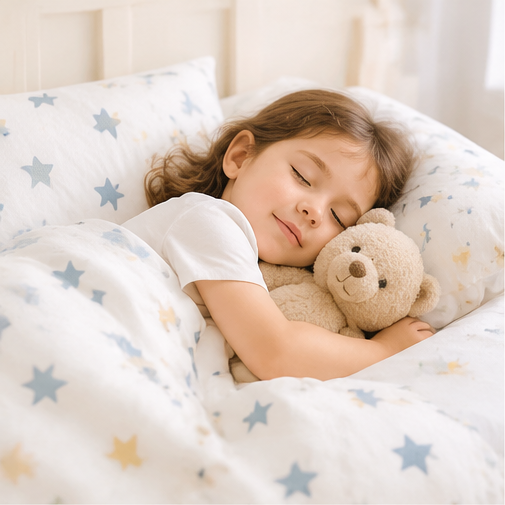
1. What Is the Best Fabric for Toddler Bedding?
Different fabrics offer different levels of softness, breathability, warmth, and ease of care. No single fabric is ideal for every season or household. The right choice depends on your child's sleeping environment, local climate, and laundry habits.
Cotton Bedding
Cotton is one of the most popular fabric choices for toddler bedding.
Cotton fibers are known for their good moisture absorption and breathability. They generally provide a comfortable feel, making them suitable for everyday bedding. For children who tend to sweat during sleep, breathability and moisture absorption are also important factors to consider.
The main advantages of cotton bedding include:
- Soft and comfortable feel
- Good breathability
- Good moisture absorption
- Suitable for everyday use
- Available in a wide variety of fabric constructions and weaves
However, the term "100% Cotton" does not mean that all cotton bedding has the same softness or durability. Fiber quality, yarn construction, weaving methods, dyeing, and finishing processes can all influence the final fabric performance.
Therefore, when purchasing cotton toddler bedding, do not rely solely on the "100% Cotton" label. Pay attention to the actual fabric quality and manufacturing processes as well.
Cotton-Polyester Blend Bedding
Cotton-polyester blend fabrics combine cotton fibers with polyester fibers to balance comfort, durability, and ease of care.
These fabrics typically offer several advantages:
- Good durability
- Better wrinkle resistance
- Easy everyday care
- Generally faster drying
- Suitable for frequent washing and regular use
For families that need to wash bedding frequently, as well as commercial buyers looking for practical bedding solutions, cotton-polyester blends can be a worthwhile option.
Flannel Bedding
Flannel is generally more suitable for autumn, winter, and colder sleeping environments.
Through brushing and other finishing processes, flannel fabrics develop a soft, fuzzy surface that provides a cozy feel and additional warmth.
The main characteristics of flannel bedding include:
- Good warmth
- Soft, brushed surface
- Suitable for autumn and winter
- Ideal for colder climates
If winter temperatures are low in your area, flannel sheets, fitted sheets, and other warm bedding products can be considered.
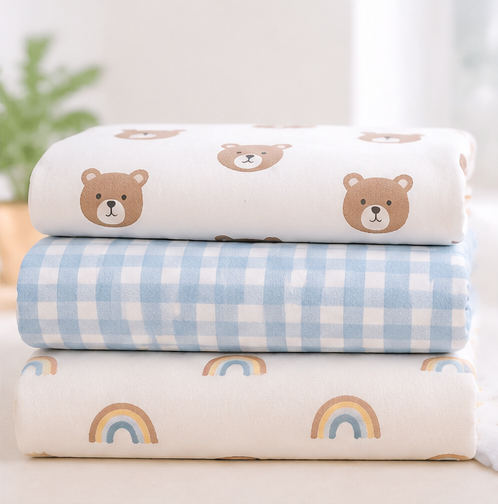
2. What Size Bedding Do Toddlers Need?
Size is one of the most important factors when purchasing toddler bedding.
Instead of relying only on product names such as "toddler bed" or "toddler bedding," it is better to measure the actual mattress before choosing sheets.
Measure the Mattress First
At least three measurements are needed:
- Length: The length of the mattress
- Width: The width of the mattress
- Thickness: The thickness of the mattress
The length and width determine whether a fitted sheet can cover the mattress properly, while the thickness directly affects the required pocket depth.
For example, two mattresses may have the same length and width but different thicknesses. As a result, they may require fitted sheets with different pocket depths.
What Is Pocket Depth?
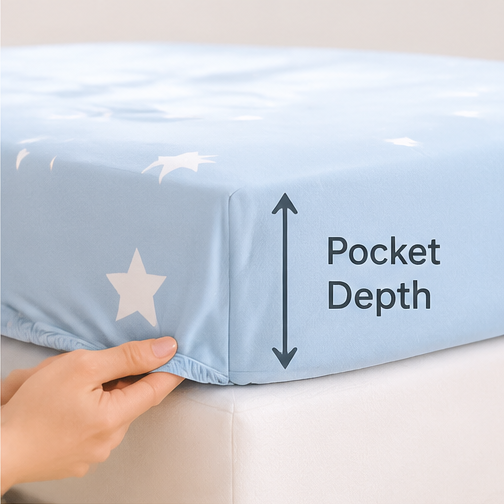
Pocket depth refers to the depth of a fitted sheet's corner pockets, which wrap around the sides of the mattress.
When choosing a fitted sheet, you need to check not only its length and width but also whether its pocket depth is sufficient for your mattress.
If the pocket depth is too shallow, the fitted sheet may not cover the mattress properly. An incorrect fit can also affect how smoothly and securely the sheet stays in place.
Therefore, when searching for terms such as "toddler fitted sheet size" or "toddler fitted sheet dimensions," remember to consider mattress thickness and fitted sheet pocket depth in addition to length and width.
3. Flat Sheets vs. Fitted Sheets: Which Is Better for Toddlers?
Flat sheets and fitted sheets each have their own advantages.
Flat sheets have a simple structure, offer more flexibility in sizing, and are generally easy to fold and store. Fitted sheets feature elasticized corners that help them fit more closely around the mattress.
|
Comparison |
Flat Sheets |
Fitted Sheets |
|
Installation |
Simple |
Designed to fit snugly |
|
Fit and stability |
May shift more easily |
Generally stays in place better |
|
Active toddlers |
May require more frequent adjustment |
More convenient for everyday use |
|
Changing |
Easy |
Easy |
|
Storage |
Convenient |
Convenient |
For toddlers who move around frequently during sleep, fitted sheets are generally more likely to stay in place. This is why many families prefer toddler fitted sheets.
However, flat sheets also have their advantages. If flexibility, easy storage, or compatibility with different mattress sizes is a priority, regular toddler bed sheets can also be a suitable option.
4. How Thick Should Toddler Bedding Be?
Bedding should not simply be chosen based on the idea that thicker is always better.
Your child's sleeping environment, the season, indoor temperature, and local climate all influence the appropriate bedding weight.
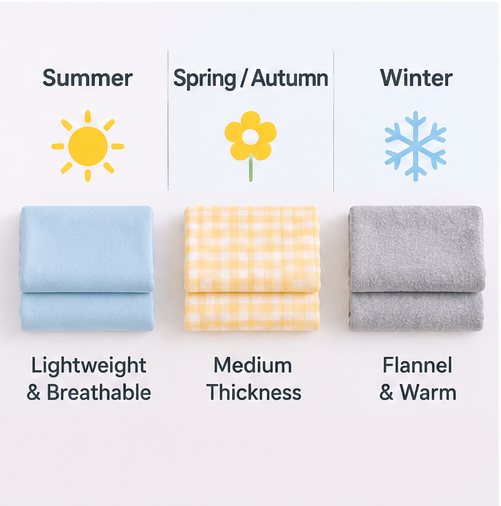
Summer
For summer or hot and humid environments, consider:
- Lightweight fabrics
- Breathable materials
- Fabrics with good moisture absorption
- Lightweight bedding
When room temperatures are high, overly heavy bedding may reduce sleeping comfort.
Spring and Autumn
Medium-weight bedding is often suitable for spring and autumn.
If temperatures fluctuate significantly between day and night, adjust the bedding according to the actual room temperature rather than relying on one fixed thickness.
Winter
For colder climates, flannel and brushed fabrics can be considered for their additional warmth.
However, indoor temperature should also be taken into account. In homes with central heating, bedrooms may remain relatively warm during winter, so very heavy bedding may not always be necessary.
The key principle is simple: Choose bedding according to the actual sleeping environment rather than focusing on thickness alone.
5. How to Determine Whether Toddler Bedding Is Soft and Comfortable
Many consumers judge bedding simply by how soft it feels. However, several factors influence the actual texture and comfort of a fabric.
From a fabric manufacturing perspective, the following factors are worth considering:
- Fiber quality
- Yarn construction
- Weave
- Fabric finishing
- Fabric weight
- Surface feel
Fiber Quality
Fiber quality influences the softness, strength, and durability of the finished fabric.
Yarn Construction
The structure and quality of yarn affect fabric uniformity, strength, and overall texture.
Weave
Weaving methods determine how yarns are arranged to form the fabric structure. Different weaves create different surface characteristics and can influence breathability and fabric performance.
Fabric Finishing
Finishing processes can further improve or modify fabric softness, surface texture, and appearance.
Fabric Weight
Fabric weight also affects the thickness, drape, and overall feel of bedding.
Therefore, the comfort of a bedding set cannot be determined by just one specification.
Is Higher Thread Count Always Better?
Not necessarily.
Thread Count refers to the number of threads per unit area of fabric. It is a commonly advertised bedding specification, but it does not independently determine fabric quality.
A higher Thread Count does not automatically mean that bedding is softer, more breathable, or more durable.
Instead, consider several factors together:
- Fiber quality
- Yarn quality
- Weaving methods
- Fabric weight
- Finishing processes
- Actual surface feel
- Durability
In other words, Thread Count is one reference point, not the only indicator of bedding quality.
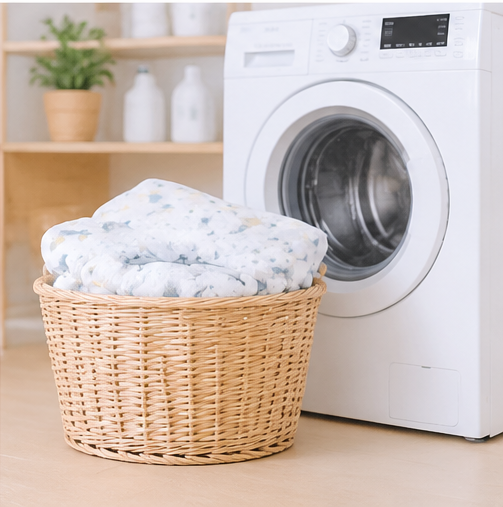
6. Toddler Bedding Should Be Easy to Wash and Maintain
Toddler bedding often needs to be washed more frequently than adult bedding, making easy care an important consideration.
Before purchasing, check the following:
- Whether the fabric is machine washable
- Whether it is prone to shrinkage
- Whether the colors may fade
- Whether the fabric is prone to pilling
- Whether the stitching is durable
- Whether the fabric can withstand regular use
- Whether the dimensions remain stable after washing
How Often Should Toddler Bedding Be Washed?
There is no single washing schedule that works for every household.
If your child sweats frequently, or if the bedding becomes stained with food, drinks, or other substances, it should be washed promptly.
For children who use their bedding less frequently and sleep in a relatively clean environment, washing can be scheduled according to actual usage.
Rather than following a rigid washing interval, it is more important to check bedding regularly and wash it whenever necessary.
Always follow the care instructions on the product label to help minimize shrinkage, color fading, and fabric damage.
7. How to Choose Toddler Bedding for Different Climates
Climate conditions vary significantly from one country or region to another. As a result, there is no single type of toddler bedding that works equally well in every market.
Hot and Humid Climates
For tropical and subtropical regions, consider:
- Cotton
- Lightweight fabrics
- Breathable fabrics
- Moisture-absorbing materials
The main goal is to reduce excessive warmth and improve everyday sleeping comfort.
Cold Climates
For colder regions, suitable options may include:
- Flannel
- Brushed fabrics
- Warmer bedding
- Layering
Flannel and brushed fabrics generally offer a warmer, softer surface, making them popular choices for colder seasons.
Mild Climates Throughout the Year
In regions with relatively moderate temperatures throughout the year, lightweight or medium-weight bedding can be selected according to indoor temperatures and seasonal changes.
For bedding brands and buyers selling to international markets, understanding the different bedding needs associated with local climates can also help with product range planning.
8. FAQ
What Is the Best Fabric for Toddler Bedding?
Cotton is a popular choice because it is generally soft, breathable, and comfortable for everyday bedding. However, the best fabric depends on the child's sleeping environment, climate, season, and care requirements.
Is Cotton Better Than Polyester for Toddler Bedding?
Neither material is universally better. Cotton is often valued for its softness, breathability, and moisture absorption, while polyester can offer good durability, wrinkle resistance, and easy care. Cotton-polyester blends can provide a balance between the two.
What Size Sheets Do Toddlers Need?
The correct sheet size depends on the actual mattress dimensions. Measure the mattress length, width, and thickness before buying sheets or fitted sheets. For fitted sheets, also check the pocket depth.
Are Fitted Sheets Better for Toddlers?
Fitted sheets can provide a closer fit around the mattress and may stay in place more easily than flat sheets. However, choosing the correct size and pocket depth is essential for a proper fit.
How Often Should Toddler Bedding Be Washed?
There is no single washing schedule that suits every household. Bedding should be washed regularly and whenever it becomes visibly dirty, sweaty, or stained. Always follow the care instructions provided with the product.
How Many Sets of Toddler Bedding Should I Buy?
Having 2–3 sets is practical for most families because one set can be in use while another is being washed or kept as a spare.
Conclusion
When choosing toddler bedding, do not focus only on attractive colors, patterns, or designs. It is equally important to consider fabric quality, sizing, comfort, thickness, care requirements, and construction.
For parents, the first step is to confirm the mattress dimensions and thickness, then select suitable fabrics and bedding weights based on the climate and sleeping environment.
For bedding buyers and retailers, evaluating fabric specifications, manufacturing quality, and product durability is equally important.
A well-designed toddler bedding set should provide a good balance of comfort, proper fit, durability, and easy everyday care.