

What Is the Best Thread Count for Cotton Sheets
Thread count is one of the most commonly used specifications when choosing cotton bed sheets. Many buyers assume that a higher thread count means softer, more durable, and better-quality bedding.
But it is not that simple.
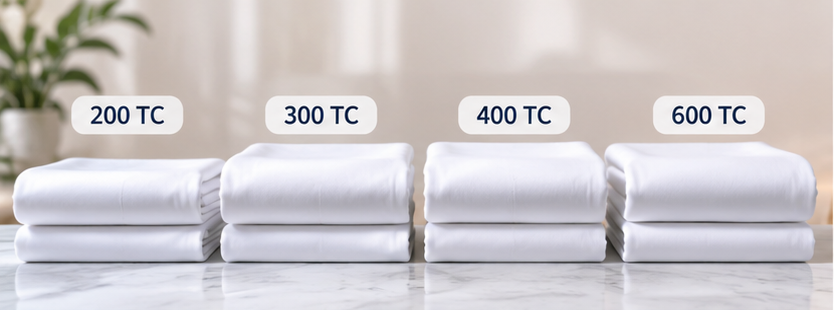
For most cotton bed sheets, 200–600 thread count (TC) covers a practical range for both home and hotel bedding. Sheets around 200–300 TC are generally suited to lightweight and breathable bedding, while 300–400 TC offers a good balance of comfort, breathability, and durability. A 400–600 TC fabric can provide a denser and softer feel for customers looking for a more premium bedding experience.
However, thread count alone does not determine sheet quality. Fiber quality, yarn quality, yarn count, weave, finishing, and manufacturing quality all influence the final performance of cotton bed sheets.
So, instead of simply looking for the highest thread count, buyers should choose a thread count that matches the cotton fiber, yarn construction, weave, climate, and intended use.
Suggested
illustration 1 — 16:9:
A clean professional comparison of cotton bed sheets labeled 200 TC, 300 TC,
400 TC and 600 TC, showing differences in fabric density and texture. Premium
textile photography style, neutral background, no text except simple TC labels.
1. What Is Thread Count?
Thread count refers to the total number of warp and weft threads woven into one square inch of fabric.
For example, if a square inch of fabric contains 150 warp threads and 150 weft threads, the fabric has a thread count of 300 TC.
In simple terms, thread count describes the thread density of a fabric.
A higher thread count generally means that more threads are packed into the same area. However, this does not automatically mean that the fabric is better.
The final quality of cotton bed sheets also depends on:
· Cotton fiber quality
· Fiber length
· Yarn quality
· Yarn count
· Weave
· Finishing
· Manufacturing quality
This is why thread count should be treated as one important specification rather than the only measure of quality.
2. What Is the Best Thread Count for Cotton Sheets?
There is no single thread count that is best for every cotton bed sheet.
The right choice depends on the desired feel, climate, application, and fabric construction.
200–300 TC: Lightweight and Breathable
Cotton sheets in the 200–300 TC range are generally lightweight and breathable.
They can be a good choice for:
· Hot or humid climates
· Summer bedding
· Lightweight bed sheets
· Breathable hotel bedding
· Cost-conscious bulk purchasing
A 300 TC sheet is not necessarily low quality. When made with good cotton fibers, suitable yarns, and an appropriate weave, it can provide excellent comfort and breathability.
For hot climates, a breathable 200–300 TC fabric can sometimes be more comfortable than a much denser fabric.
300–400 TC: A Balance of Comfort and Durability
For many home and hotel bedding applications, 300–400 TC provides a practical balance between comfort and performance.
This range can offer a good combination of:
· Softness
· Breathability
· Durability
· Fabric density
· Comfort
· Cost
For buyers looking for versatile 100% cotton bed sheets for year-round use, 300–400 TC is often a practical starting point.
400–600 TC: Softer and Denser
A 400–600 TC cotton sheet generally has a denser construction and can provide a softer, fuller hand feel.
This range is often suitable for:
· Premium home bedding
· Luxury home bedding
· High-quality hotel bedding
· Hotel quality bedding
· Buyers looking for a softer and more substantial feel
However, 600 TC is not automatically better than 400 TC.
A well-made 400 TC sheet using high-quality long-staple cotton and fine yarns may perform better than a 600 TC sheet made with lower-quality yarns or a less suitable construction.
Above 600 TC: Look Beyond the Number
When thread count goes above 600 TC, buyers should pay closer attention to the actual yarn construction.
For 800 TC, 1000 TC, or even higher thread counts, it is important to ask:
· What type of cotton is used?
· What is the yarn count?
· Is the fabric single-ply or multi-ply?
· How is the thread count calculated?
· Is the fabric construction balanced?
· Does the fabric maintain good breathability?
A very high thread count should therefore not be the main reason for choosing a cotton bed sheet.
Suggested
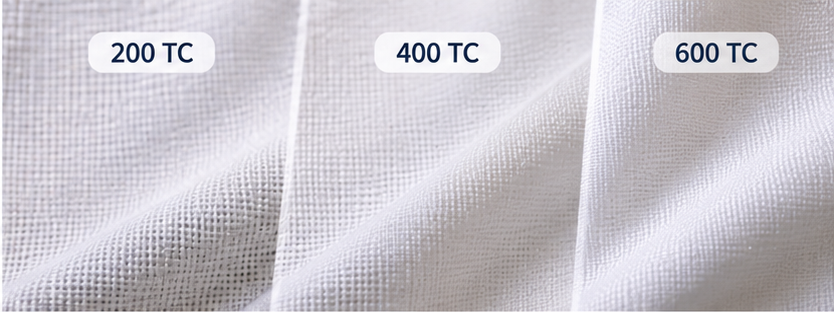
illustration 2 — 16:9:
A realistic textile close-up showing three cotton fabrics with different thread
densities: 200 TC, 400 TC and 600 TC. Show the weave structure clearly while
keeping the overall image elegant and suitable for a professional B2B bedding
website.
3. Is Higher Thread Count Always Better?
No.
A higher thread count means that more threads are present within a given area, but it does not tell you everything about the quality of those threads.
For example, a 300 TC bed sheet may be made from high-quality long-staple cotton with fine yarns and a carefully selected weave.
Another 800 TC sheet may use multi-ply yarns and achieve a higher thread count through a different counting method.
The larger number does not automatically mean better performance.
When evaluating cotton bed sheets, buyers should look at:
Fiber Quality + Yarn Quality + Yarn Count + Weave + Finishing
These factors work together to determine the final feel, appearance, durability, and performance of the fabric.
4. What Matters More Than Thread Count?
4.1 Cotton Fiber Length
Fiber length is an important factor in yarn quality.
Longer cotton fibers can generally be spun into finer and more uniform yarns. This can contribute to a smoother and more refined fabric.
This is one reason why long-staple and extra-long-staple cottons are commonly used in premium bedding.
When buying Egyptian Cotton bed sheets, however, buyers should not rely only on the name “Egyptian Cotton.”
It is also important to evaluate:
· Fiber length
· Yarn count
· Thread count
· Weave
· Finishing
· Actual fiber composition
4.2 Yarn Count
Thread count and yarn count are two different specifications.
Thread count describes the total number of warp and weft threads in a square inch of fabric.
Yarn count describes the fineness or thickness of the yarn.
Therefore:
Thread Count ≠ Yarn Count
A sheet can have a high thread count while using relatively coarse yarns. Another sheet with a lower thread count may use finer, higher-quality yarns.
For professional bedding buyers, thread count and yarn count should therefore be evaluated together.
4.3 Weave
The weave determines how the yarns are arranged in the fabric and has a direct effect on the sheet's feel, appearance, and breathability.
Two common cotton sheet constructions are:
· Percale
· Sateen
Neither is universally better. They simply provide different characteristics.
4.4 Finishing
After weaving, cotton fabric can undergo different finishing processes to achieve specific performance and appearance characteristics.
For example, washed cotton can be treated through washing and finishing processes to create a softer and more relaxed hand feel.
Finishing can influence:
· Softness
· Appearance
· Hand feel
· Dimensional stability
· Wrinkle resistance
· Durability
As a result, two fabrics with the same thread count can feel very different depending on their yarns, weave, and finishing.
Suggested
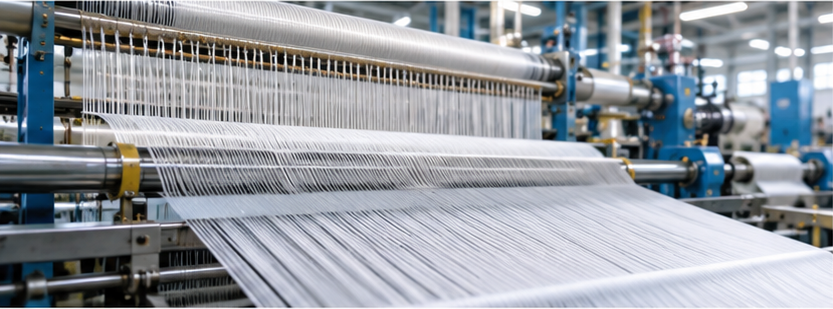
illustration 3 — 16:9:
A professional textile manufacturing scene showing cotton yarn being woven into
bed sheet fabric, followed by a subtle visual transition to fabric finishing.
Clean factory environment, realistic textile machinery, premium B2B
manufacturing aesthetic.
5. How Do Percale and Sateen Affect Cotton Sheets?
Percale
Percale is commonly associated with a crisp, cool, and breathable feel.
It can be a good choice for:
· Hot climates
· Summer bedding
· Breathable bed sheets
· Hotel bedding
· Customers who prefer a crisp hand feel
For markets with hot or humid weather, Percale cotton bed sheets can be an attractive option.
Sateen
Sateen generally provides a smoother and softer hand feel with a subtle sheen.
It can be suitable for:
· Luxury home bedding
· Premium hotel bedding
· High-end residential bedding
· Customers who prefer a smooth and soft feel
The difference between Percale and Sateen is therefore not simply about which one is “better.”
In general:
Percale focuses on crispness, coolness, and breathability.
Sateen focuses on softness, smoothness, and a more luxurious appearance.
Suggested
illustration 4 — 16:9:
A side-by-side visual comparison of white cotton Percale and Sateen fabrics.
Percale should look crisp, matte and breathable; Sateen should look smooth,
soft and subtly lustrous. Same lighting, same camera angle, same dimensions.
6. How Should Thread Count Be Selected for Different Cotton Types?
Upland Cotton
Upland Cotton is one of the commonly used cotton types for bedding.
It can be used in different grades of bed sheets depending on the yarn, weave, finishing, and manufacturing process.
The cotton type alone does not determine the final quality of the sheet.
Egyptian Cotton
Egyptian Cotton is commonly associated with long-staple cotton and premium bedding.
However, buyers should evaluate more than the name when sourcing Egyptian Cotton bed sheets.
Important specifications include:
· Actual fiber composition
· Fiber length
· Yarn count
· Thread count
· Weave
· Finishing
Pima Cotton
Pima Cotton is a long-staple cotton type commonly used for higher-quality textiles.
Its longer fibers can be used to produce fine and consistent yarns, making it suitable for premium cotton bed sheets.
Supima Cotton
Supima® refers to a branded form of American-grown Pima cotton.
When sourcing products described as Pima or Supima, buyers should verify the actual fiber composition, product specifications, and relevant certifications supplied by the manufacturer or supplier.
7. How Should Thread Count Be Selected for Different Applications?
Hot Climates
For hot and humid markets, buyers can consider:
200–400 TC + Breathable Weave
Percale is particularly worth considering when breathability and a cool hand feel are priorities.
Instead of simply increasing thread count, buyers should focus on:
· Breathability
· Lightweight construction
· Cooling feel
· Fabric structure
· Fiber quality
Cold Climates
For colder environments, 300–600 TC can be considered when a denser and fuller fabric is preferred.
However, warmth is influenced by the overall bedding system, including fabric weight, construction, and filling materials.
Thread count should therefore not be used as the only indicator of warmth.
Home Bedding
For general home bedding, 300–400 TC is a practical range for many applications.
For premium positioning, 400–600 TC can be considered together with high-quality cotton fibers and a suitable weave such as Sateen.
For customers who prefer a softer, more relaxed appearance and feel, washed cotton is another option worth considering.
Hotel Bedding
Hotel bedding has different requirements from ordinary home bedding.
Hotel and hospitality linen may be exposed to:
· Frequent washing
· Commercial drying
· Repeated use
· Friction
· High turnover
· Large-volume laundry operations
Therefore, hotel buyers should evaluate:
Thread Count + Yarn Quality + Weave + Durability + Shrinkage + Color Fastness + Pilling Resistance
For budget hotels, cost efficiency, durability, and easy care may be the main priorities.
For mid-range hotels, 300–400 TC can provide a practical balance between comfort and performance.
For premium hotels, 400–600 TC may be considered depending on the hotel's positioning and desired guest experience.
These ranges should be treated as general purchasing references rather than universal quality standards.
Suggested
illustration 5 — 16:9:
A premium hotel bedroom featuring professionally made white cotton bedding,
showing a clean, luxurious hotel environment. The bed should be the main
subject, with subtle visual emphasis on the sheets and pillowcases. No visible
brand logos or text.

8. How to Choose the Right Cotton Bed Sheets
The right cotton bed sheet depends on the intended use rather than thread count alone.
If Breathability Is the Priority
Consider:
200–400 TC + Percale + High-Quality Cotton
This combination can be suitable for hot climates and customers who prefer a crisp and breathable sleeping environment.
If Softness Is the Priority
Consider:
300–600 TC + Sateen + Quality Yarn
This can be suitable for customers looking for a Soft or Ultra Soft hand feel, especially in premium home bedding and luxury hotel applications.
If Pilling Resistance and Durability Matter
Do not evaluate these characteristics based on thread count alone.
Consider:
· Fiber quality
· Yarn quality
· Weave
· Finishing
· Pilling resistance
· Washing performance
If Wrinkle Resistance Matters
Look for fabrics and finishing processes designed to provide improved wrinkle resistance.
However, wrinkle resistance cannot be determined from thread count alone.
If You Are Buying Hotel Bedding
Do not ask only:
“What is the thread count?”
Also ask:
· What type of cotton is used?
· What is the yarn count?
· Is it single-ply or multi-ply?
· What is the weave?
· What is the fabric weight?
· What is the shrinkage rate?
· What is the color fastness?
· How does the fabric perform after repeated washing?
For professional buyers, these specifications provide a much clearer picture of whether a cotton bed sheet is suitable for a particular hotel or hospitality application.
9. Frequently Asked Questions
What is a good thread count for cotton bed sheets?
For most cotton bed sheets, 200–600 TC can be a practical range.
Around 200–300 TC is suitable for lightweight and breathable bedding, 300–400 TC offers a balanced option, and 400–600 TC can provide a denser and softer feel.
Is 300 thread count good for cotton sheets?
Yes. 300 TC can be an excellent specification for cotton bed sheets when the fabric uses good-quality cotton, suitable yarns, and an appropriate weave.
Is 600 thread count better than 400?
Not necessarily.
A 600 TC fabric may feel denser and fuller, but a well-made 400 TC fabric using high-quality cotton and fine yarns can provide excellent softness, breathability, and durability.
Is 1000 thread count really better?
Not necessarily.
Ultra-high thread counts should be evaluated together with yarn construction and the way the thread count is calculated.
A larger number does not automatically mean better-quality bedding.
What thread count is best for hotel bedding?
Hotel bedding can use different thread counts depending on the hotel category, budget, and desired guest experience.
As a general reference:
· Budget hotels: 200–300 TC
· Mid-range hotels: 300–400 TC
· Premium hotels: 400–600 TC
However, hotel quality should also be evaluated based on durability, shrinkage, color fastness, pilling resistance, and repeated washing performance.
What is the difference between thread count and yarn count?
Thread count refers to the total number of warp and weft threads in a square inch of fabric.
Yarn count describes the fineness or thickness of the yarn.
They are two different specifications and should be evaluated together when assessing cotton bed linen.
Conclusion
There is no single thread count that is best for every cotton bed sheet.
As a general reference:
200–300 TC is suitable for lightweight and breathable bedding.
300–400 TC offers a practical balance of comfort, breathability, and durability.
400–600 TC is suitable for buyers looking for a softer, denser, and more substantial fabric.
When thread count goes above 600 TC, especially at 800 or 1000 TC, buyers should look more closely at the yarn construction and actual fabric quality rather than simply choosing the larger number.
The quality of cotton bed sheets is determined by much more than thread count:
Fiber Quality + Yarn Quality + Yarn Count + Weave + Finishing + Manufacturing Quality
For home bedding, luxury home bedding, hotel bedding, and hospitality linen, the goal should not be to find the highest thread count.
The better approach is to find the right combination of fiber, yarn, weave, finishing, durability, and thread count for the intended market and application.
For wholesalers, hotel buyers, and businesses sourcing customized bedding, these specifications should be evaluated together with fabric construction, sizes, quality requirements, customization options, and supplier capabilities.