

Complete Buying Guide for International Bed Sheet Sizes
Complete Buying Guide for International Bed Sheet Sizes
Ⅰ. Choosing Bed Sheet Sizes Is Far More Complicated Than You Think
Many buyers assume bed sheets are standardized products and that they can buy well-fitted bedding simply by picking names such as Twin, Queen and King. This is actually the most common misunderstanding. A bed sheet is more than just decorative; it serves three core functions: mattress protection, hygienic isolation and improved sleeping comfort. It blocks sweat and skin flakes to slow down mattress aging, and fabric texture directly affects your sleep experience. Therefore, accurate bed sheet measurements directly determine the service life of the whole bedding set and sleep quality.
Cross-border shopping makes it even trickier. Bed-type names are used worldwide, but actual sizes vary from country to country — this is the biggest pitfall. The same bed model may have bed sheet dimensions differing by several to over ten centimeters across different markets and brands, and you cannot tell the difference just from product titles. To save trouble, the first step is to confirm which size system you are using. A bed sheet size chart is a basic reference tool, but only after you separate US Standard from UK/EU Standard.
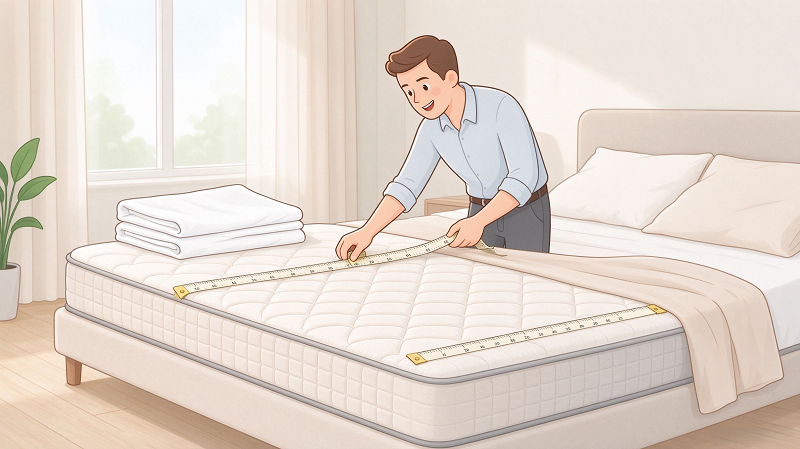
Ⅱ. Identical Bed-Type Names Come With Different Global Size Standards
1. US/CA Standard vs UK/EU Standard: No Interchangeability for Same-Named Bed Types
The first rule for cross-border bedding purchase: US/CA Standard and UK/EU Standard are two independent size systems, and bed sheets with identical bed-type names are barely interchangeable. US Standard uses Inches as the base unit; mattress and bed sheet specifications are mostly marked in inches. UK/EU Standard uniformly adopts centimeters (cm), and European bed sheet sizes cm are clearly listed. When buying UK bedding, always refer strictly to specifications including UK single bed sheet size cm, UK double bed sheet dimensions, UK king size sheet dimensions and super king bed sheet size UK (Source: UK retail bedding size standards and UK textile trade specifications).
A US Queen bed is roughly equivalent to a UK King bed; a US King bed is far larger than a UK Super King bed. In other words, two beds both labelled "Queen" have different width and length measurements in North America versus UK/EU, so their matching bed sheets cannot be swapped.
US Standard beds are generally longer with narrower width specifications; UK/EU Standard provides more flexible width options with multiple width variants. This discrepancy becomes more obvious on extended-length beds, such as the Twin XL specially designed with extra length under US Standard.
2. Conversion Errors Between Inches and Centimeters
Mixing inch and centimeter units is another major cause of wrong sizes in cross-border orders. 1 inch = 2.54 centimeters. Simple as this conversion seems, mattresses, bed sheets and duvet covers are often marked in different units. Buyers frequently mistake inches for centimeters or vice versa, resulting in bed sheet sizes deviating by over ten centimeters. Conversion errors will compound fabric shrinkage: cotton bed sheets shrink by a percentage after washing, and the larger the base measurement, the bigger the final deviation. For this reason, convert all target bed sheet measurements into the same unit before ordering, then compare them against your actual mattress dimensions (Source: international unit conversion standards and general conversion rules for bedding trade).
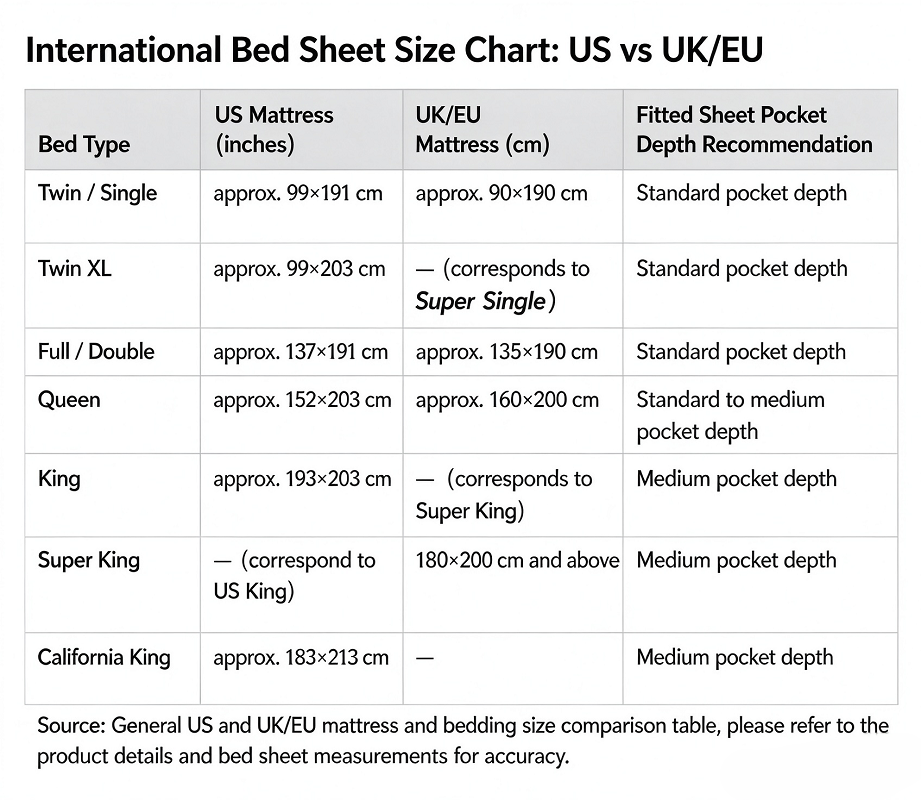
Ⅲ. Do Not Rely Solely on Product Titles; Always Verify Detailed Dimensions
Twin, Queen and King written in merchant titles are merely marketing labels, not reliable size references. The correct procedure is to check the bed sheet dimensions listed in the product details page, and focus on three key points: confirm which system the product follows (US Standard or bed sheet). The fit of bed sheets depends not only on original dimensions but also on long-term fabric performance. Cotton, TENCEL Lyocell and polyester blends are the three mainstream fabrics with distinct properties. Pure cotton is highly breathable and skin-friendly but suffers relatively large shrinkage and stretching after washing; TENCEL Lyocell has a smooth, cool touch and better dimensional stability; polyester blends are wrinkle-resistant and durable with almost zero shrinkage, yet slightly less breathable. Pre-shrunk treatment greatly reduces cotton shrinkage, and some high-thread-count pre-shrunk fabrics barely shrink at all.
Notably, pure cotton bed sheets under US Standard generally have higher shrinkage rates than EU counterparts. Therefore, different fabric types require different size allowances; we recommend reserving 3%–10% extra space based on fabric properties (Source: industry reference shrinkage rates for cotton, Lyocell and polyester blended fabrics).
Ⅶ. Solutions for Mismatched Bed Sheet and Mattress Sizes
It is inevitable to buy bed sheets that are too big or too small. Follow this priority order for the easiest fix:
- Temporary securing:
Use sheet fasteners, safety pins or tucking techniques to fix oversized sheets along mattress edges for emergency use.
- Sewing alteration:
Cut the fabric after precise measurement and add elastic bands on four corners for a long-term solution, suitable for handy buyers.
- Leverage fabric elasticity:
Fine-tune dimensions by stretching or shrinking cotton fabric. However, shrinkage is limited (4%–10%), and this method does not work for pre-shrunk fabrics.
Important reminder: There is a limit to mixing US Standard and UK/EU Standard bed sheets. Forcing a mismatched sheet on your mattress will lead to tight corners or loose, wrinkled fabric. If the bed sheet is made of high-end material, custom printed pattern or premium series, do not alter it yourself; contacting the seller for return and exchange is more cost-effective (Source: general fabric shrinkage reference values and after-sales return policies for bedding).
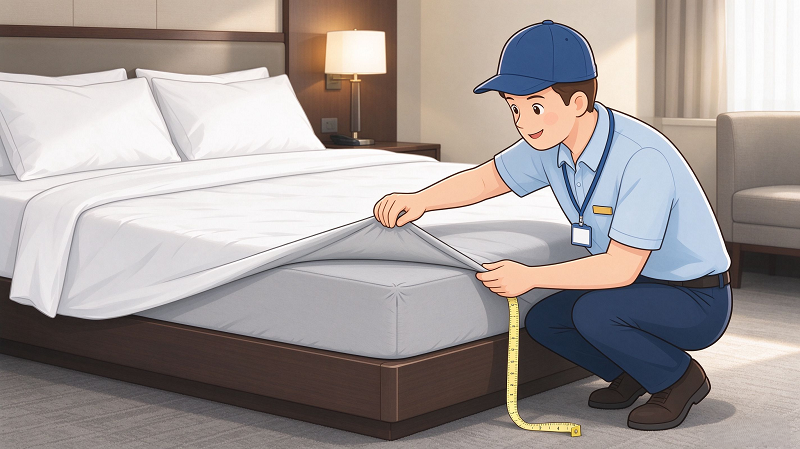
Ⅷ. Cross-Border Bedding Purchase Checklist: Frequent Mistakes Summary
Checklist Highlights
- Only checking bed-type names while ignoring the deep pocket of the fitted sheet: This is the top mistake with thick mattresses. Always verify pocket depth.
- Only matching mattresses and bed sheets while ignoring duvet cover and duvet fit: Duvet covers must match duvet dimensions; otherwise the duvet cannot fit inside.
- Blindly ordering full sets without measuring the mattress first, only to find the whole set ill-fitted upon arrival.
- Confusing US Standard and UK/EU Standard in cross-border purchases: Placing orders purely based on identical bed-type names is the biggest cause of size mismatch.
In addition, bulk purchasing and custom bedding have extra pitfalls. A custom size bed sheets manufacturer always requires precise measurements from buyers. A hotel bed sheet size guide helps commercial buyers verify standard specifications. A wholesale bed sheet dimensions chart and OEM bed sheet sizes specifications are essential reference documents for bulk order parameter checks (Source: cross-border bedding purchasing and custom order procedures).
Ⅸ. Frequently Asked Questions (FAQ)
- What is the difference between US Queen and EU Queen? Can they be used interchangeably?
No interchangeability. Queen size bed sheet dimensions under US Standard are longer overall, while EU Queen is shorter and wider. Matching bed sheets cannot be swapped; always confirm the measurement system before ordering.
- How deep a pocket do I need for a thick latex mattress?
Are there differences between US Standard and EU Standard deep pocket sizes? Choose deep pocket fitted sheet dimensions or extra deep pocket sheet sizes for thick latex mattresses, with pocket depth covering the full mattress thickness. US mattresses are generally thicker than EU ones, so their deep pocket standards differ.
- Can split king bed sheets fit an adjustable bed?
Yes, but you must select special split king sheet dimensions designed for independent left-and-right lifting. Regular bed sheets will not fit adjustable beds.
- What is the typical shrinkage rate of pure cotton bed sheets? Is there a big gap between US and EU cotton fabrics?
Pure cotton bed sheets normally shrink by 4%–10%. Pure cotton bedding made to US Standard generally has a higher shrinkage rate than EU bedding (Source: industry reference shrinkage rates for cotton fabrics).
- Do flat sheet and fitted sheet follow the same size selection logic?
No. A fitted sheet relies on deep pocket to wrap tightly around the mattress, so tight fit is essential. A flat sheet sizes chart leaves much larger margins for covering and tucking, so the selection logic is different.
- Can hotel-grade bedding be used directly on household mattresses?
Generally not recommended. Most hotel bedding follows UK/EU Standard, which does not match household US mattress sizes. You must cross-check against a hotel bed sheet size guide before adapting it for home use.