

Polyester Bedding Stands Out as Dark Horse of 2026 Home Textile Exports: Deep Cultivation in Africa Unlocks Blue Ocean Growth
In 2026 the domestic bedding industry faces intensifying cutthroat competition, with homogeneous production capacity being phased out continuously and market competition gradually turning rational. Against this backdrop, numerous home textile enterprises have pivoted to explore overseas markets, among which polyester bedding exports to Africa stand out as the core growth driver of the sector.
Benefiting from compatible fabric performance, ultra-high cost performance and favorable China-Africa trade policies, polyester bedding has rapidly captured Africa’s home textile market, emerging as the backbone of China’s home textile foreign trade exports and unlocking brand-new growth avenues for the industry.
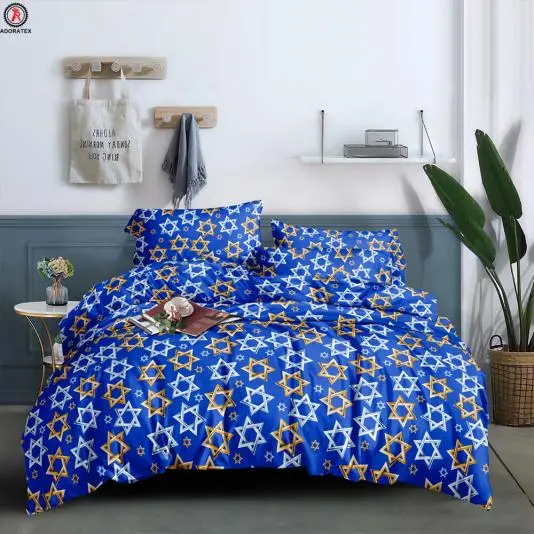
Africa’s unique climatic conditions and consumption structure endow polyester bedding with irreplaceable market advantages. Most regions across Africa feature tropical and tropical savanna climates, characterized by year-round high temperatures, high humidity and intense sunlight. Traditional cotton bedding is prone to dampness, mildew, deformation and damage, resulting in a short service life that fails to meet local daily usage demands. In contrast, polyester fabrics are sturdy, wash-resistant, sun-proof, mildew-proof and deformation-resistant, with wrinkle-free and low-maintenance properties that perfectly adapt to Africa’s harsh climatic environment. Meanwhile, polyester boasts low production costs and affordable finished bedding prices, which align closely with the purchasing power of ordinary African consumers, making it the dominant bedding material in local markets

Beyond product strengths, weak local light textile manufacturing capacity in Africa and favorable trade policies provide strong tailwinds for China’s polyester bedding exports. At present, Africa’s light textile industry lacks solid foundations with scarce home textile production lines, leading to a severe shortage of local bedding supply and heavy reliance on imports. Nigeria, South Africa, Egypt, Kenya and Algeria constitute the five core markets for China’s bedding exports to Africa, accounting for nearly 60% of total shipments to the continent. In 2026, multiple China-Africa nations rolled out a two-year zero-tariff policy for textile products, slashing export costs for polyester bedding, printed polyester sets, home textile grey fabrics and other goods. This further boosted the price competitiveness of Chinese polyester bedding and fueled explosive export volume growth.
Thanks to its advantages suited to tropical climates, polyester bedding has become China’s flagship export product to Africa, tapping into an untapped blue-ocean market. Africa’s underdeveloped local light textile sector results in low self-sufficiency of home textiles and heavy import dependence, with the five key markets mentioned above taking up nearly 60% of China’s bedding exports to Africa. Supported by the two-year zero-tariff textile policy implemented by several China-Africa countries in 2026, export costs for polyester bedding, printed polyester fabrics, silk-like home textile grey fabrics and related products have dropped sharply, triggering a surge in shipments.
Demand in Africa’s bedding market keeps expanding with growing rigid consumption scenarios. Accelerated urbanization across Africa has expanded the local middle class and driven steady upgrades in household consumption demand. Meanwhile, Africa’s tourism and service sectors have staged a rapid recovery, spurring rocketing demand for bedding in commercial settings including hotels, homestays and worker dormitories. Commercial bedding requires far more frequent replacements than household bedding, continuously fueling rigid market demand for polyester products. Low-cost printed polyester bedding, polyester-filled sets, wear-resistant pillowcases and duvet covers rank as top-selling export items to Africa. Favored for their durability and affordable pricing, these products claim nearly 70% market share in Africa’s mass bedding segment.
Industry insiders point out that a distinct differentiated competition landscape has taken shape between domestic and overseas bedding markets. The domestic market leans into tech-enabled sleep aids, eco-friendly materials and high-end intelligent upgrades, raising competitive barriers constantly. In contrast, the African market prioritizes practicality and cost performance, with competition centered on fabric adaptability, durability and pricing. With precise market positioning, Chinese polyester bedding has secured a firm foothold in Africa’s mass consumer market, serving as a vital outlet for small and medium-sized home textile manufacturers to escape vicious domestic competition and drive revenue growth. Sustained rigid market demand, ongoing favorable trade policies and highly adaptable product strengths combine to make Africa the most promising blue-ocean market for bedding foreign trade.
Looking ahead to the second half of 2026, Africa will remain the core overseas destination for domestic bedding enterprises. Industry players will continue to deepen their presence in Africa’s segmented markets. Tailored to the continent’s tropical climate, manufacturers will refine production techniques for polyester bedding and roll out upgraded functional products featuring enhanced breathability, quick-dry performance, sun protection and antibacterial properties to further improve product compatibility. In addition, enterprises will seize the window of favorable China-Africa trade policies to expand export channels, diversify product portfolios and capture larger market share. Overall, exports of polyester bedding to Africa will maintain long-term growth momentum, steadily injecting stable vitality into the foreign trade economy of China’s home textile industry.
Previous:No News