

How to Wash Flannel Blankets: Complete Guide to Prevent Pilling and Fading
Flannel blankets feature a plush surface, fluffy feel and great warmth‑retention performance, making them a popular home textile for autumn and winter. They are widely used as bed blanket, home blanket and throw blanket, covering daily usage scenarios from bedrooms to sofas. However, many people make mistakes on their first wash — high‑temperature water, aggressive washing cycles and tumble drying turn soft plush fabric stiff and pilled after just a few washes. This article breaks down proper washing workflows for flannel blankets, covering machine washing, hand washing, drying and maintenance frequency in one comprehensive guide.
Ⅰ. Fundamental Fabric Properties of Flannel: Why Care Matters
Flannel demands careful care due to its fibre structure. Among popular winter blanket products, flannel holds a large market share. Its surface is covered with short, dense pile, mostly made of polyester fibre; some blends add cotton or spandex for extra softness. This short‑pile construction creates entirely different care requirements compared with plain‑woven fabrics such as cotton or linen. Once damaged by high heat or heavy friction, the pile will permanently flatten and pill, and the original soft feel cannot be restored.
There are also many other blankets on the market, including microfibre blankets, coral fleece blankets and fleece blankets. Though visually similar, their fibre structures differ, so care routines cannot be copied directly. Flannel fibres are short and soft and cannot withstand heavy mechanical agitation or high‑temperature drying in washing machines. Therefore, always refer to the care label sewn onto your blanket instead of guessing based on hand feel, to determine machine‑wash eligibility, safe water temperature and drying permissions.
As reported in China Textile News, dirt, body oils and dust get trapped deep within pile fibres if flannel blankets go unwashed for long periods and become extremely difficult to remove. Improper washing causes fibre tangling, pilling and stiffness. For flannel blankets, correct washing technique matters more than detergent selection.
Ⅱ. Flannel Blankets: Machine‑Wash vs Hand‑Wash— Suitable Scenarios & Operating Procedures
Machine‑Washable Flannel Blankets
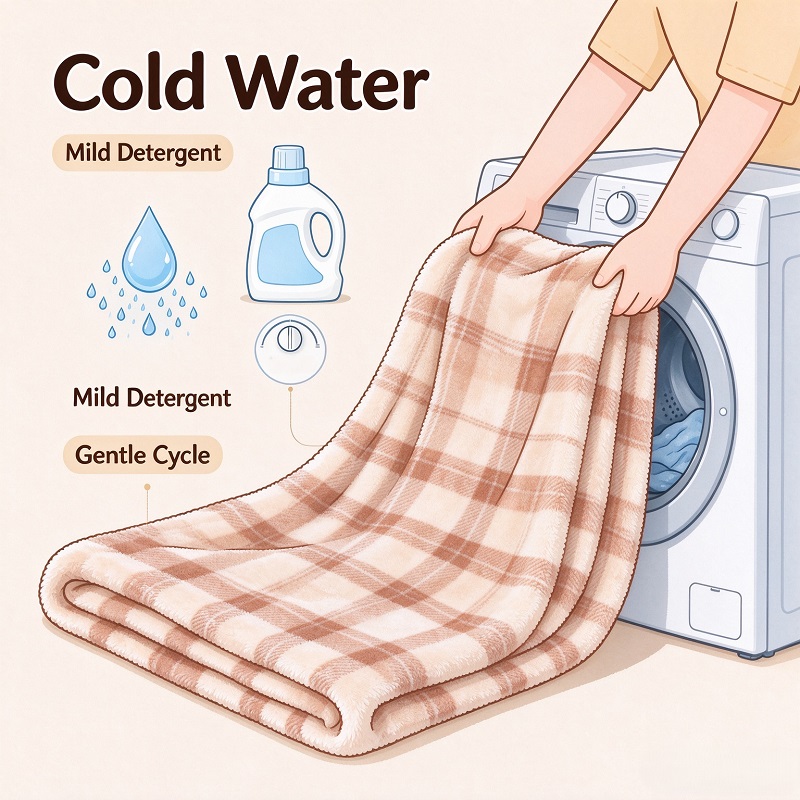
If you own a solid‑colour, standard‑thickness flannel blanket whose care label permits machine washing, select the gentle cycle. Ordinary sofa throw blanket and queen size blanket can be machine‑washed on gentle settings if labelled safe for machines. Machine washing saves labour and delivers even cleaning, yet three prerequisites must be followed:
- Water temperature: Use cold water or warm water below 30℃. Hot water deforms polyester fibres and accelerates pilling.
- Detergent: Use mild liquid detergent. Powdered laundry detergent leaves residues stuck to fibres and causes fabric stiffness.
- Load capacity: Do not overfill the washer. Load volume should not exceed 3/4 of drum capacity to allow sufficient tumbling space for the blanket pile.
Proper machine‑wash parameters help preserve softness and reduce fibre abrasion over repeated washes. Home textile industry guidelines recommend the gentle / wool / hand‑wash cycle for flannel, together with extra rinse cycles to minimise leftover detergent.
Hand‑Wash Recommended Flannel Blankets
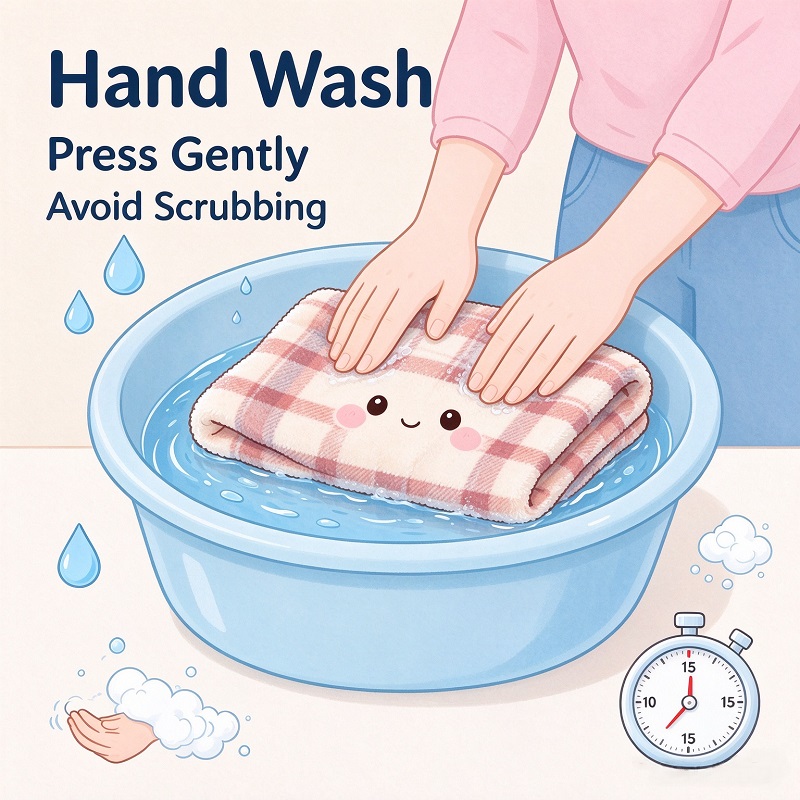
To preserve the quality of anti‑pilling flannel blanket, printed styles such as printed blanket, plus thick‑weight, pieced and embroidered blankets, hand washing is recommended to minimise fibre friction damage. The hand‑wash procedure is straightforward:
- Fill a bathtub or large basin with cold water below 30℃ and add a small amount of mild detergent.
- Submerge the flannel blanket fully, press gently and soak for 10‑15 minutes. Do not scrub vigorously.
- Rinse repeatedly with clean water until no foam remains.
- Lay the blanket over clean towels and press to absorb water. Never wring or twist, as this causes stretching and deformation.
Hand‑washing gives full control over pressure, soaking time and water temperature, offering the best protection for printed patterns and pile structure.
Machine‑Wash vs Hand‑Wash: Water Consumption, Time Cost & Fibre Protection Comparison Table
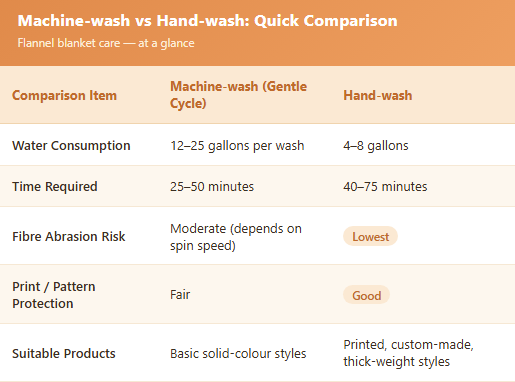
As shown in the table, machine‑washing excels in efficiency, while hand‑washing better safeguards fibres and prints. For custom blanket, follow hand‑wash guidelines wherever possible to protect surface patterns and prints.
Ⅲ. Differentiated Washing Guidelines for
Types of Flannel Blankets
1. Solid‑Colour Basic Flannel Blankets (Bed Throws, Daily Sofa Blankets)
sofa throw blanket and bed blanket are among the most frequently used household items and commonly go into washing machines. Without printed decorations, solid‑colour flannel has higher machine‑wash tolerance. Follow the machine‑wash guidance above. Shake lightly before drying to fluff the pile, then lay flat to air‑dry.
2. Printed Flannel Blankets
Printed patterns sit on top of the pile layer. Extended soaking, high‑temperature water and harsh scrubbing lead to colour fading and print cracking. Limit soaking duration to prevent pattern fading. Turn the blanket inside‑out, hand‑wash in cold water, restrict soaking time to under 10 minutes and use bleach‑free mild detergent. Dry inside‑out away from direct sunlight, as UV rays accelerate dye degradation.
3. Oversized Thick‑Weight Flannel Blankets
Many wholesale export items such as queen size anti pilling flannel blanket wholesale belong to this category of large‑format winter blanket. Always respect washing‑machine load limits. Thick blankets gain substantial weight once water‑soaked; machine‑washing may trigger drum imbalance, incomplete cleaning and even appliance damage. Wash alone, adjust water volume appropriately, or opt for hand‑washing plus flat drying to ensure thorough cleaning and complete drying of thick pile layers.
4. Recycled Polyester Flannel Blankets & OEM Hotel Bulk Flannel Blankets
Commercial products like hotel hospitality custom flannel blanket bulk feature enhanced fabric stability. Even so, strictly regulate water temperature and spin speed for bulk‑washing. High‑turnover commercial environments use industrial washing equipment; operators must apply consistent cold‑water cycles, neutral detergents and fixed rinse‑dry standards to balance cleanliness, service life and fabric‑wear costs.
5. Logo‑Printed Custom Flannel Blankets
Products such as custom logo blanket mostly adopt heat‑transfer or rubber‑print logos. These prints are fragile and vulnerable to strong mechanical agitation and high heat. Turn inside‑out for washing and shorten machine‑wash cycle time.
Ⅳ. Drying & Air‑Drying Rules: Critical for Preserving Flannel Softness
Drying choices for home blanket directly determine pile fullness and service life. Two major hazards for flannel are direct sunlight exposure and high‑heat tumble drying.
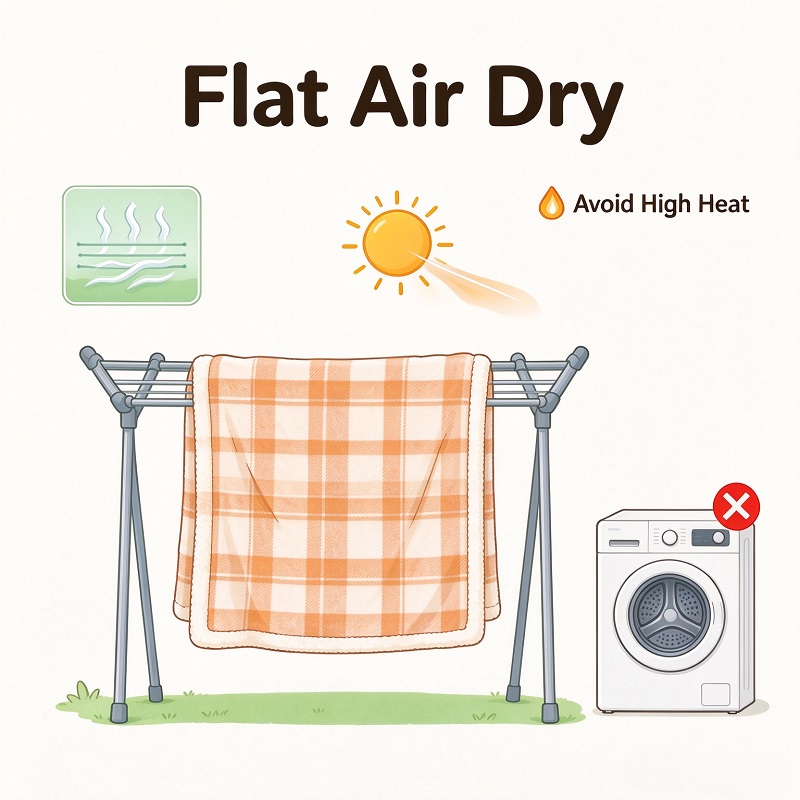
First choice: Natural air‑dry. Lay the flannel blanket flat on drying racks or clean surfaces away from direct sunlight. Ultraviolet radiation degrades dyes and dulls colours; air‑drying allows fibres to recover naturally and retains maximum softness. Research published in textile journals confirms air‑drying preserves more original softness than high‑heat tumble drying — this represents standard home‑textile industry guidance for flannel care.
Second choice: Low‑heat tumble drying. If you must use a tumble dryer, select low‑heat mode (below 120℉ / 49℃). Remove the blanket while still slightly damp to reduce static electricity and fibre damage. Never use high‑heat cycles: high temperatures partially melt polyester fibres, flatten pile and leave blankets stiff and lifeless.
Hanging‑dry warning: Water‑soaked flannel carries considerable weight. Hanging vertically creates gravitational stretching and permanent deformation, especially for large‑size styles. Flat drying is superior to hanging drying.
Source note: Drying‑temperature recommendations sourced from Journal of Textile Care research findings on synthetic‑fibre drying and general home‑textile industry care standards.
Ⅴ. Washing Taboos: Substances You Must
Several hard rules govern flannel care. Breaking any rule may permanently ruin soft hand‑feel.
- Fabric softener. Fabric softener coats short flannel fibres. While creating short‑term slipperiness, it blocks fibre breathability. Built‑up residues make blankets stiffer and more prone to pilling over time. Even premium‑grade anti‑pilling flannel blanket will suffer stiffness and increased pilling with repeated softener application. Fabric softener should never be used on flannel.
- Bleach and chlorine‑based disinfectants. Bleach weakens fibre structures, causes uneven discolouration and fibre brittleness. Keep bleach entirely away from printed styles.
- Strong‑alkaline powder laundry detergent. Powder residues cling to fibre surfaces, resulting in stiffness and aggravated pilling. Switch to liquid neutral detergent instead.
- Hot‑water washing and high‑speed spin‑drying. Hot water and intense centrifugal force damage pile construction. Stick to cold‑water programmes with gentle spin settings.
Avoid these four hazards to noticeably extend blanket service life and preserve soft texture.
Source note: Impacts of softener and bleach on synthetic fibres sourced from textile research literature studying surfactant residues on textile fibres.
Ⅵ. Local Stain Removal for Flannel Blankets
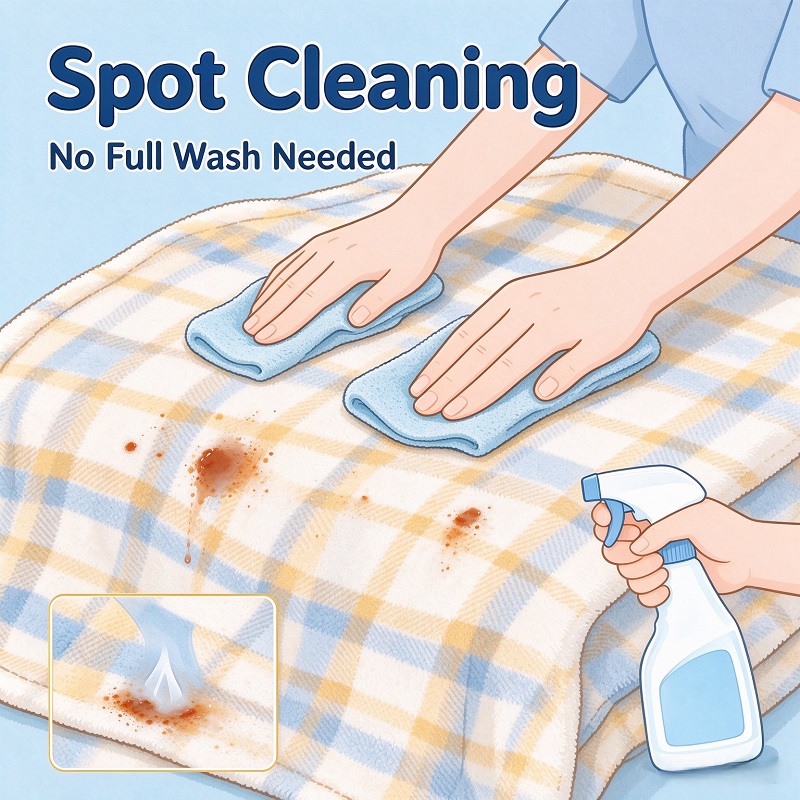
Local stains do not require full immersion. For printed blanket and custom blanket, perform spot treatment to reduce pattern wear caused by complete washing cycles. Treat stains according to stain categories:
Protein stains (sweat, milk, food): Gently dab stained spots with cold water and oxygen‑based cleaner. Leave to sit for several minutes, then press repeatedly with clean damp cloth for stain extraction. Do not scrub hard.
Oil, tea and coffee stains: Apply small amounts of mild liquid dish soap onto stains, lather gently with fingertips, then blot away foam using damp cloth. For stubborn oil stains, pre‑treat by sprinkling cornstarch for oil absorption before regular cleaning.
Odour removal: Flannel accumulates household odours over time. Add 10‑15 ml white vinegar per litre of rinse water. Vinegar neutralises odours and dissolves leftover detergent, followed by one final clean‑water rinse. Vinegar treatment is gentle and avoids artificial fragrance additives.
After spot cleaning, blot excess moisture with dry towels and lay flat to air‑dry. Partial treatment avoids full‑blanket washing and minimises wear to pile and printed motifs.
Ⅶ. Washing Frequency & Seasonal Maintenance Schedules for Flannel
Schedules for Flannel Blankets
Washing‑Cycle Reference Table
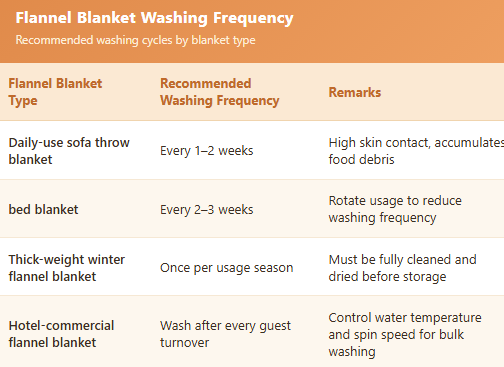
Compared with many other blankets, frequently‑used sofa throw blanket, bed blanket and similar winter blanket demand shortened washing intervals. Close skin contact builds oil‑based soil that hardens if left untreated.
Seasonal Maintenance Calendar
Commercial‑use articles such as hotel hospitality custom flannel blanket bulk operate on fixed turnover‑washing workflows, offering reference for B‑sector buyers. Household users can adopt seasonal maintenance rhythms:
- Spring: Fully clean and completely dry blankets before storage to prevent mildew and moth damage.
- Summer: Clean and ventilate lightweight blankets; avoid sealed damp storage.
- Autumn: Air out stored blankets before seasonal use; light‑wash to remove dust accumulated during storage.
- Winter: Remove loose surface pile and address fresh stains promptly during heavy‑usage periods to prevent stain setting.
Ⅷ. Long‑Term Care: Practical Tips to Reduce
Maintaining fluffy flannel blankets depends not only on washing habits but also day‑to‑day care.
First‑wash for new blankets: Minor fibre shedding is normal for brand‑new flannel. Wash separately for the first cycle to drastically reduce future loose‑fibre shedding.
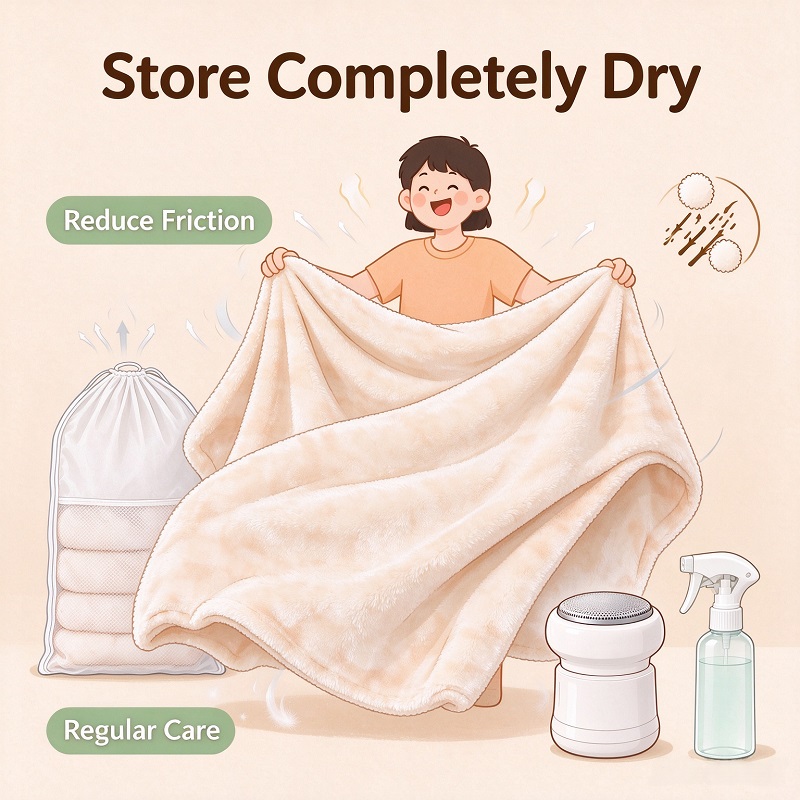
Reduce friction: Prevent direct contact with coarse fabrics and metal zippers; friction is the primary cause of pilling.
Pilling management: Use a fabric shaver carefully to trim formed pills. Never pull pills by hand — pulling tears intact fibres and creates larger‑scale damage.
Static‑electricity control: Flannel builds static in dry environments. Without fabric softener, shake blankets thoroughly after drying or apply small amounts of anti‑static spray.
Storage guidance: Make sure queen size blanket are 100 % dry prior to storage to avoid mildew and musty smells. Store inside breathable cotton storage bags instead of air‑tight plastic bags. personalized blanket should be stored separately, away from rough zippers and sharp objects that cause snags.
Consistent small‑care practices preserve softness and lower occurrences of pilling and fibre shedding.
Ⅸ. FAQ — Frequently Asked Questions
1.Is fibre shedding normal for new flannel blankets on first wash? How can shedding be reduced?
Yes. New blankets contain loose surface short fibres. Separate cold‑water first‑wash removes most loose fibres. Coral fleece blankets may shed more heavily on initial laundering; always wash separately.
2.What is the safest washing method if the care label is missing?
Cold‑water hand‑wash and flat air‑dry with mild liquid detergent represent the safest fallback routine for unlabelled blankets.
3.Why does my flannel blanket turn stiff after washing, and how can softness be restored?
Stiffness usually stems from detergent residue or high‑heat drying. Even well‑made anti‑pilling flannel blanket stiffens with repeated fabric‑softener use. Re‑rinse thoroughly, add vinegar during one rinse cycle, then air‑dry at low temperature; partial softness recovery is achievable.
4.Can faded printed flannel blankets be repaired?
Fading on printed blanket mostly comes from overly‑hot water or over‑long soaking periods. Faded prints cannot be reversed, but further fading can be halted by inside‑out cold‑water hand‑washing and shortened soaking time.
5.Can I wash flannel blankets mixed with other clothing items?
Bed blanket and throw blanket should be washed separately. Denim and coarse towels abrade pile surfaces and transfer loose flannel fibres onto other laundry.
6. How frequently should flannel blankets be washed?
Follow usage scenarios: household sofa throw blanket every 1‑2 weeks; bed blanket every 2‑3 weeks; winter blanket once per usage season; hotel‑commercial blankets after every guest turnover.
The core principle for washing flannel blankets follows four keywords: cold water, mild detergent, gentle cycle, air‑dry. If the care label permits machine‑washing, most flannel blankets can go into washing machines on gentle cold‑water cycles. For printed, custom‑made and thick‑weight variants, hand‑washing plus flat air‑drying best avoids pilling, colour fading and dimensional distortion.
Most flannel blankets are polyester‑based. They feel soft and deliver good warmth, yet their short‑pile structure is delicate. Poor washing techniques bring pilling, fibre shedding and rigid hand‑feel. Correct washing technique outweighs expensive specialty detergents. Use cold water and mild liquid detergent on gentle cycles for plain solid‑colour styles. Hand‑wash printed, logo‑printed or custom‑made blankets wherever possible to preserve surface artwork. Air‑dry in cool shaded spaces; high‑heat tumble‑drying crushes pile permanently. Three product categories must never touch flannel: fabric softener, bleach, and high‑alkaline powdered laundry detergent, all of which accelerate pile damage and pilling. Adjust washing intervals according to real‑world usage: wash frequently‑used household sofa blankets every one‑to‑two weeks; launder hotel commercial blankets after each guest stay. Shedding from brand‑new blankets originates from production‑residual loose short fibres; one separate pre‑wash greatly reduces subsequent shedding. Simple habits including spot‑stain treatment and moisture‑free storage keep your blankets fluffy and comfortable long‑term.
Previous:No News